.png)
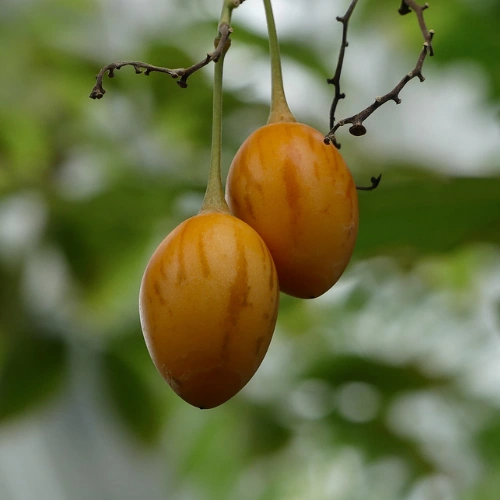
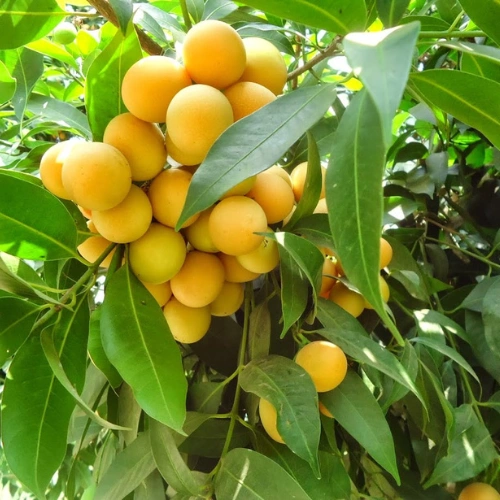
Marian plum in Thai is called maprang (ma-praang and another name is ma-yong), and in Latin - bouea macrophylla. Other popular names of this fruit: - Plum mango, - Marian mango, - Mayun (Myanmar), - Ramania ? gandaria (Indonesia), - Kundang, rembunia and setar (Malaysia). Medium-sized evergreen tree, 12–20 m (40–65 ft) tall, with a dense, rounded crown. Alternate, lanceolate to elliptic, leathery leaves 20–40 cm (8– 16 in) long by 5–8 cm (2–3 in) wide. Small greenish or yellow flowers in pendent panicles. Oval orange-yellow fruits 3–6 cm (1.2–2.4 in) long, resembling a small mango. The juicy, orange-colored flesh, which adheres to the seed, has a sweet or sweet-sour taste with a scent of turpentine. Fruits contain one seed. The tree grows naturally in a region ranging from Myanmar and southern Thailand to Malaysia, Sumatra, and western Java. Cultivated throughout tropical Asia as a dooryard fruit tree and shade tree, also occasionally grown in Africa and tropical America. The tree grows best below 500 m (1,600 ft) in a tropical monsoon climate with a distinct short dry season and long wet season. It is grown commercially for its fruit in Thailand and Malaysia. Maparang fruit plants in Kerala is also availabe now. Food uses. Unripe fruits are eaten raw, often sprinkled with lime juice and salt. Unripe, entire fruits (including the seed) are usually used in chutneys and pickles. They are chopped up and employed in savory dishes like curries and form an essential ingredient in rojak, a typical spicy fruit and vegetable dish of Malaysia, Singapore, and Indonesia. In Indonesia, the pickled fruits are eaten in a traditional mixed vegetable or fruit dish called asinan. Green fruits are also an ingredient in the spicy sambal sauce. Ripe fruits, especially the sweet varieties, are eaten fresh or cooked with sugar to make desserts and preserves. Young leaves are eaten raw in salads or cooked as a vegetable. . Botanical Name : Maparang Fruit Country : Thailand flowers color : Small greenish or yellow flowers
 Site Selection
 Planting
 Care
Care
 Harvest
 Propagation
Exotic Fruits Plants World Organic Farm and Nursery Offer 1000 Of Variety of Exotic Plants,Fruits And Pets for sale.Delivery Avaliable Any Where In India.